
December 4, 2025
Understanding soybean cyst nematodes (SCN): the hidden threat beneath the soil
Soybean cyst nematodes (SCN), Heterodera glycines, are one of the most damaging pests to soybeans in North America, despite their microscopic size. They attack soybean roots, reducing yield potential before visible symptoms appear, and create an optimal environment for Sudden Death Syndrome (SDS), a major fungal disease caused by Fusarium virguliforme. Understanding the biology, impact, and management strategies for SCN is crucial for protecting productivity and maintaining sustainable cropping systems.
BIOLOGY AND LIFE CYCLE
SCN is an obligate plant parasite that lives in the soil in the form of eggs enclosed within a cyst. These cysts can survive for up to 10 years, even in the absence of a soybean host, and over adverse conditions.
Once soil temperatures reach around 70°F (21°C) and adequate moisture is present, eggs hatch into juvenile nematodes. These juveniles penetrate the soybean roots using a stylet, a sharp, needle-like mouthpart, feeding on the plant’s root cell walls and forming a specialized feeding site called a syncytium. This syncytium functions like a “feeding cell”, continuously supplying the nematodes with sugars, amino acids, and nutrients drawn from the soybean plant’s vascular system.
As the nematodes mature, adult males return to the soil and mate with adult females, who then begin to reproduce within a few days, with the average adult female laying approximately 200 eggs. After fertilization, the female lays eggs inside her body and then dies, hardening into a cyst which serves as a protective shell for the eggs to survive adverse conditions such as cold winter temperatures.
A complete SCN life cycle can be completed in 3–4 weeks under optimal conditions, allowing multiple generations within a single growing season.
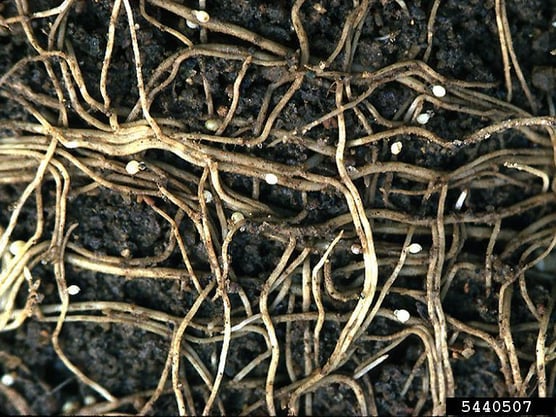
Soybean Cyst Nematodes (SCN)
Source: Jonathan D. Eisenback, Virginia Polytechnic Institute and State University, Bugwood.org
SYMPTOMS AND YIELD IMPACT
Above-ground symptoms are often subtle and easily mistaken for nutrient deficiency, compaction, or drought stress. Plants may appear stunted, chlorotic, or uneven in growth. However, yield loss can occur even in the absence of visible symptoms, often resulting in up to 30% loss before detection.
Below-ground, infected roots show reduced nodulation, poor root growth, and the presence of small white or yellow cysts visible under magnification.
SCN damage can create the perfect breeding zone for Sudden Death Syndrome (SDS). This fungal disease begins by infecting the roots and later leads to distinctive above-ground symptoms, such as interveinal chlorosis, leaf scorch, premature defoliation, and in severe cases, early plant death. Since SCN feeding wounds provide entry points and increase plant stress, SDS symptoms often become more serious in SCN-infested fields.
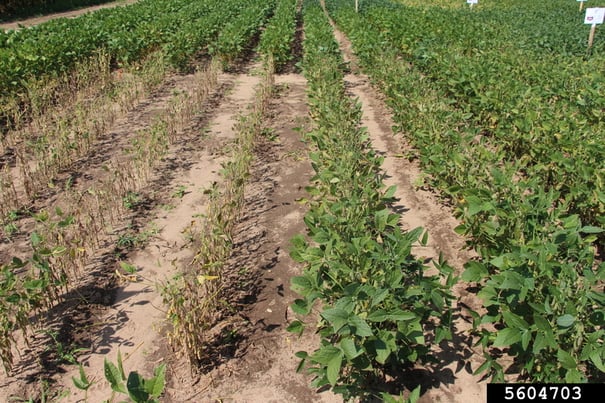
Sudden Death Syndrome (SDS)
Source: Martin Chilvers, Bugwood.org
DIRECTIONS AND DIAGNOSTICS
Accurate diagnosis of SCN relies on soil sampling and laboratory analysis. Fall sampling after harvest or before planting is ideal, targeting the top 6–8 inches of soil. Nematode egg counts are reported as eggs per 100 cm³ of soil, providing a quantitative measure of population density. Threshold levels for management decisions vary by region, but any detection warrants attention and monitoring.
MANAGEMENT STRATEGIES
Managing SCN requires an integrated approach combining the following methods:
- Crop Rotation
Rotating with non-host crops such as corn, wheat, or alfalfa can significantly reduce SCN populations, although cysts can survive multiple years. Rotations of two or more years without soybeans are most effective.
- Resistant Varieties
Several sources of resistance to SCN are known, but most SCN-resistant soybean varieties contain PI 88788 or Peking. However, heavy reliance on these sources has led to adaptation in many SCN populations, resulting in a critical need for a multifaceted strategy using other management techniques.
- Field Monitoring
Regular soil testing every 3–5 years helps track population trends over time to tailor management decisions to specific field conditions.
It is also beneficial to reduce soil movement between fields by ensuring all equipment is properly cleaned of soil particles before introducing it into a new field.
- Biological and Chemical Control
Seed treatments and biological nematicides are showing promise in suppressing nematode activity and protecting root health. These can complement resistant genetics, especially in fields with mixed or resistant SCN populations.
Averland® FC nematicide by Vive Crop Protection is a powerful new tool for growers to combat SCN, as well as Root-knot, Reniform, and Lesion nematodes. This easy-to-use, in-furrow solution mixes seamlessly with liquid fertilizers, micronutrients, and other crop inputs, enabling an easier and more efficient application for growers. Adding Phosphorus and Potassium to your in-furrow mix puts key nutrients where seedling roots can access them in cold soils. Along with Averland FC, growers get protection on their soybean roots from day one, strengthening the plants throughout the season, and driving yield for a strong finish.
CONCLUSION
Soybean cyst nematodes (SCN) represent a persistent and evolving challenge in modern soybean production. Effective management depends on vigilance, diversification of resistance, and integration of new tools. By understanding the nematode’s biology and adopting proactive practices, growers can protect yield potential and sustain soybean profitability for years to come.
Learn more about Averland FC by visiting www.vivecrop.com/products/averland-fc
Important: Always read and follow label instructions. AVERLAND® FC IS A RESTRICTED USE PESTICIDE. Averland® and Precision Chemistry™ are trademarks of Vive Crop Protection Inc. ©2025 Vive Crop Protection Inc.