Cylindrocladium Black Rot and Leaf Spot in Peanuts: Two Diseases, Two Battles
Peanut production faces constant pressure from fungal diseases that reduce yield, weaken plant vigor, and increase management costs. Among these diseases, two of the most damaging are Cylindrocladium black rot (CBR) and leaf spot.
While both diseases are caused by fungal pathogens, they differ significantly in how they infect peanuts, survive in the environment, and in how they should be managed in the field. Understanding these differences is essential for building an effective, season-long disease management strategy.
Cylindrocladium Black Rot: The Underground Threat
Cylindrocladium black rot (CBR), caused by Calonectria ilicicola, is one of the most destructive soil-borne diseases affecting peanut production. What makes CBR especially challenging is that infection begins below ground, often long before visible symptoms appear above the soil surface.
By the time plants begin to wilt or turn bronze, the pathogen has often already colonized the root system, leaving limited management options.
CBR can survive in soil for years through microsclerotia, compact masses of hardened fungal mycelium. Under warm, moist soil conditions, these microsclerotia germinate and infect young roots and crown tissue.
Once established, the fungus damages the plant’s vascular system, resulting in: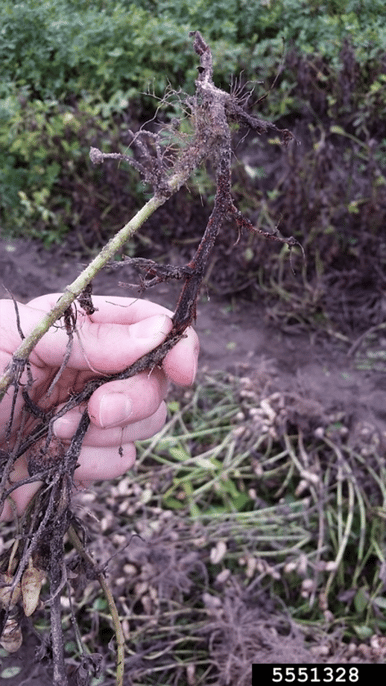
- Restricted water and nutrient uptake
- Reduced plant vigor
- Crown rot and root decay
- Premature plant death in severe cases
How to scout for CBR
Symptoms of CBR may include:
- Dark discoloration around the crown and lower stem
- Reddish-orange fungal growth near infected tissue
- Yellow, bronze, or dark brown foliage
- Wilting during periods of heat stress
- Plant collapse or premature death
One of the greatest challenges with CBR is its persistence. Because the pathogen can survive in soil for multiple years, fields with a history of CBR may remain high-risk long after visible symptoms disappear. This is why preventative management is critical.
Photo Source: Dan Anco, Clemson University, Bugwood.org
Preventative Management for CBR
- Longer crop rotations: Rotating to non-host crops like corn or cotton for multiple years can help reduce fungal survival in the soil and lowers future disease pressure.
- Plant resistant varieties: Selecting varieties with improved tolerance or resistance can significantly reduce disease severity and protect yield potential, especially in fields with a known history of CBR infection.
- Reduce soil movement: Because the pathogen spreads easily through contaminated soil, sanitation plays an important role in disease management. Recommended practices include:
- Cleaning equipment between fields
- Managing volunteer peanut plants
- Harvesting heavily infected fields last whenever possible
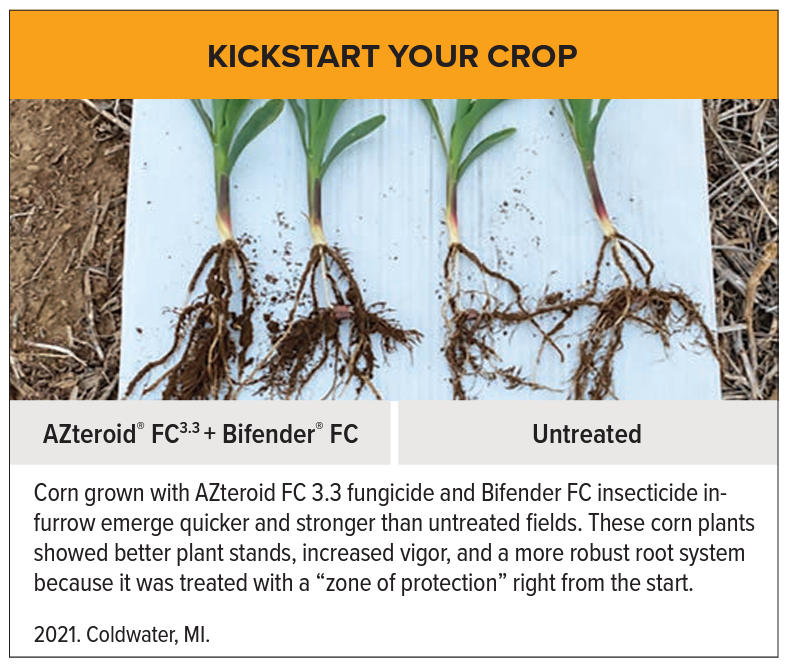
- Apply fungicides early: Since infection occurs underground early in the season, fungicides are most effective when applied preventatively through in-furrow applications or seed treatments.
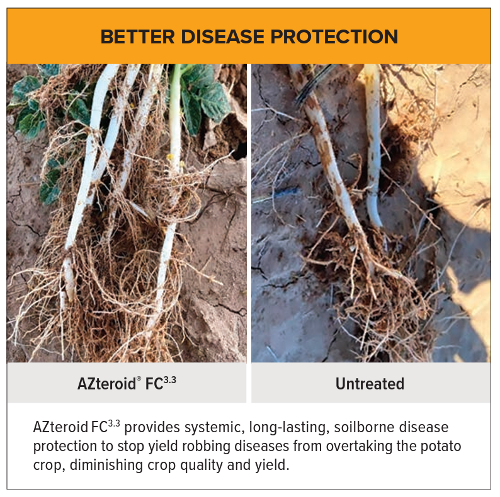
Applying Phobos® FC fungicide in-furrow can help protect developing roots and crown tissue during the critical early stages of infection, when the pathogen is most active below ground.
With Phobos FC, growers benefit from:
-
-
- Superior disease protection even under high-pressure conditions, helping preserve yield from day one.
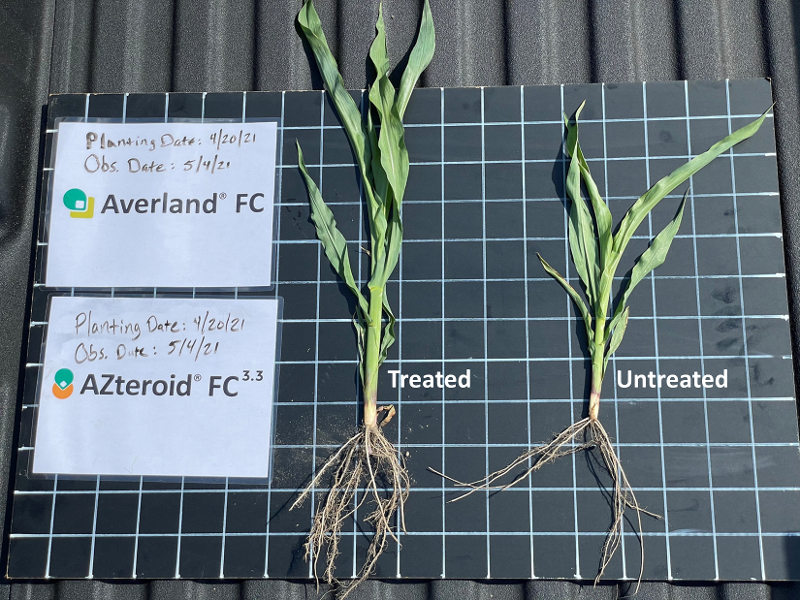
- Stronger plant stands and overall plant health.
- Flexible tank mixing with liquid fertilizers, micronutrients, and other crop inputs, enabling a hassle-free, efficient application at planting.
-
Early Leaf Spot vs. Late Leaf Spot
Leaf spot diseases are among the most common foliar threats in peanuts. While both diseases cause defoliation and yield loss, early leaf spot and late leaf spot behave differently in the field and require different management approaches.
Early Leaf Spot: Early leaf spot is caused by Passalora arachidicola and typically appears earlier in the growing season.
The pathogen survives between seasons in infected peanut residue left on or near the soil surface. When warm temperatures and moisture return, spores are produced and spread through rain splash, irrigation, and wind-driven moisture.
After infection occurs, brown lesions with yellow halos develop on leaves and continue producing spores, allowing the disease cycle to repeat throughout the season.
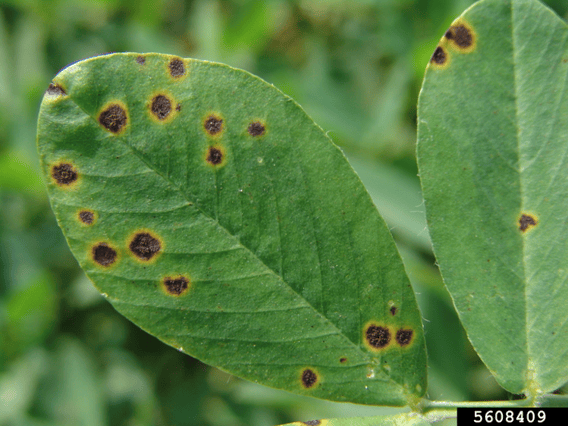
Photo Source: Gerald Holmes, Strawberry Center, Cal Poly San Luis Obispo, Bugwood.org
Early Leaf Spot Management:
- Rotating away from peanuts to reduce infected residue
- Planting varieties with improved leaf spot tolerance
- Managing irrigation to minimize prolonged leaf wetness
- Promoting airflow through balanced canopy growth
- Maintaining timely fungicide programs throughout the season
Late Leaf Spot: Late leaf spot, caused by Nothopassalora personata, is often considered more aggressive than early leaf spot and typically develops later in the season under extended humid conditions.
Like early leaf spot, the pathogen survives in infected peanut residue and spreads through rainfall and irrigation under warm, wet conditions.
Late leaf spot lesions are generally:
- Smaller than early leaf spot lesions
- Dark brown to black in color
- Most visible on the underside of leaves
Severe infections can lead to rapid defoliation late in the season, exposing pods to sunburn and significantly reducing yield potential.
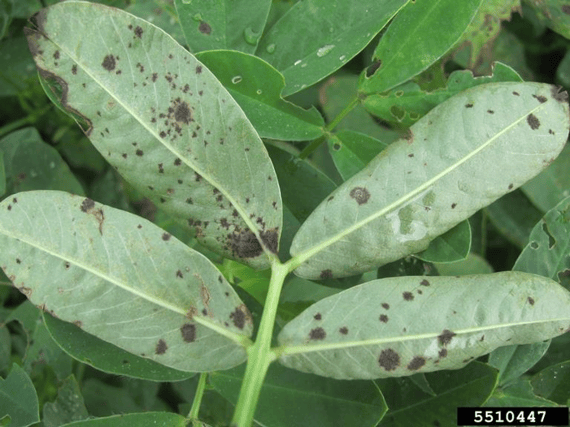
Photo Source: Barbara Shew, North Carolina State University, Bugwood.org
Late Leaf Spot Management:
- Avoiding excessive canopy density and prolonged leaf wetness
- Rotating crops to reduce overwintering inoculum
- Using preventative fungicide programs with strong residual activity
- Rotating fungicide modes of action to help reduce resistance risk
A foliar application of Phobos FC fungicide from growth stages R2–R7 can provide strong protection against key foliar diseases, including early and late leaf spot.
With foliar applications of Phobos FC, growers get:
-
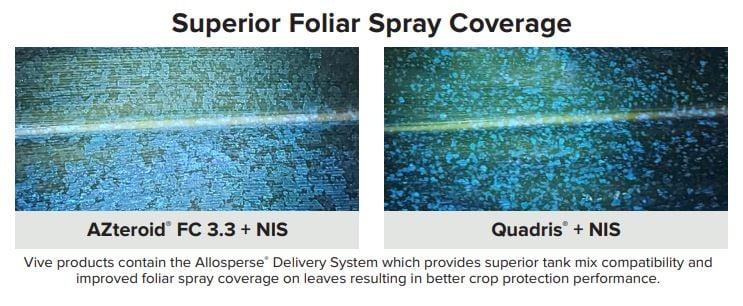
- Maximum peanut leaf coverage due to its widespread, even application capabilities.
- A solution that dries stronger on the leaf surface, providing exceptional protection even after a rain event.
- Broad-spectrum, consistent foliar disease control for maximum yield potential.
Conclusion
Successful peanut disease management begins long before symptoms appear. From the persistent, soil-borne threat of Cylindrocladium black rot to the rapid spread of early and late leaf spot, growers face multiple disease pressures throughout the season.
The most effective defense combines strong agronomic practices with proactive, season-long disease management programs. From planting through the final pass, Vive Crop Protection’s peanut solutions are designed to fit your operation and support stronger, more resilient crops.
Learn more: https://www.vivecrop.com/crops/peanuts